
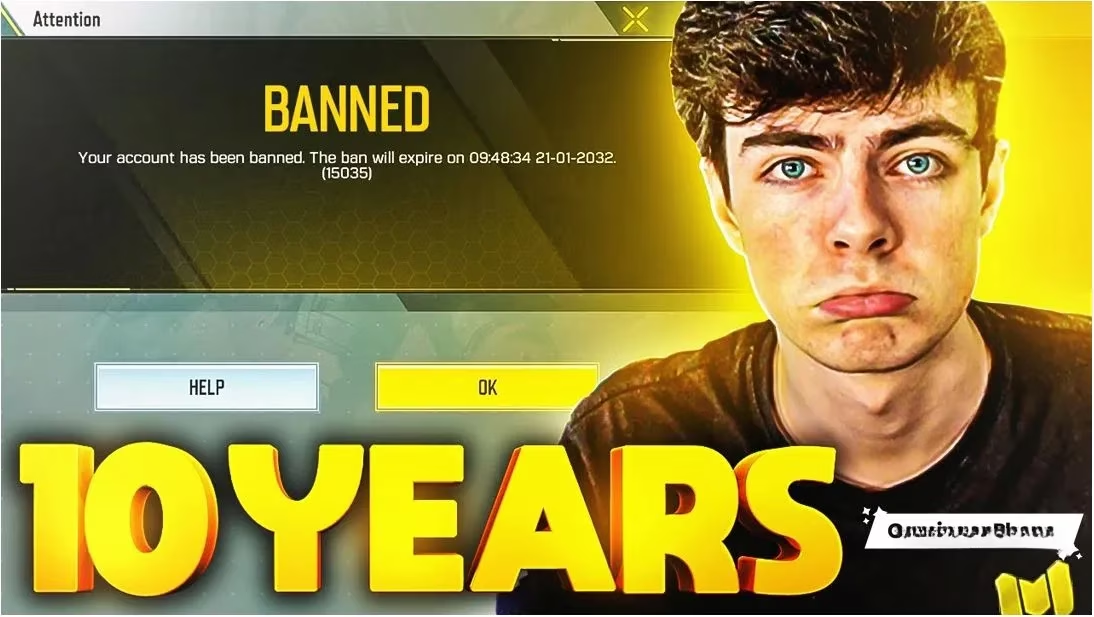
On a cold January morning in 2022, Luke Fergie — better known to millions as iFerg — woke up to a nightmare. The Call of Duty: Mobile icon, whose lightning-quick reflexes and cheerful commentary had earned him a massive following, found himself locked out of his own account. A message on the screen delivered the gut punch: banned for 10 years. No warning. No explanation. Just a countdown ticking toward January 21, 2032.
His first instinct was disbelief. He had never cheated. Not once. The very idea was absurd. iFerg streamed his gameplay live for hours every day; any suspicious software would have been spotted instantly by his eagle-eyed viewers. Yet here he was, staring at the digital equivalent of a prison sentence. He did what any creator would do — he shared the evidence with the world. A single tweet, accompanied by a screenshot, broke the internet: “I got banned in COD Mobile.”
The post exploded. Fans flooded the replies with outrage and confusion. How could one of the game’s most prominent figures fall victim to the ban hammer? The answer, as the community quickly pieced together, lay buried in a dysfunctional anti-cheat system that had been tormenting ordinary players for months.
The Mass Report Trap
The culprit wasn’t a sophisticated cheating program — it was the collective wrath of the player base. In Call of Duty: Mobile, players could report others for suspected misconduct. A single report did little. But when enough players — driven by frustration after a crushing defeat — piled on, the automated system triggered a ban. No human reviewed the evidence. No nuance was applied. If you annoyed enough opponents, you were erased.
iFerg had become the gaming equivalent of too handsome for his own good. His skill with meta weapons, his ruthless use of the Persistence perk, and his sheer dominance in ranked matches made him a target. Jealous rivals and sore losers spam-reported him after every stream. Eventually, the algorithm decided enough reports meant guilt, and the decade-long ban was sealed.

This was not an isolated accident. In the weeks leading up to iFerg's ban, dozens of players had taken to Reddit and Twitter with similar stories. They hadn’t used VPNs, hadn’t installed modded APKs, hadn’t exploited glitches. They had simply played well. Some were punished for using Persistence, a perk that the community detested but the developers had officially sanctioned. Others were banned just for clutching a 1v5. The message was clear: the anti-cheat had become a weapon in the hands of the toxic.
A Glimmer of Hope for Partners
For an average player, a 10-year ban was a death sentence. Appeals disappeared into automated email loops. But iFerg was not average. He was a verified COD Mobile partner, a badge that came with a direct line to the developer team. The community held its breath, knowing that history was on his side. NoahFromYouTube, another colossal figure in the mobile gaming scene, had endured the exact same ordeal in 2020. His account had been slapped with a decade-long ban out of the blue — but within a few days, the decision was reversed and his account was restored.
True to that precedent, iFerg’s ban was lifted swiftly. Behind the scenes, Activision’s partner management team scrambled to fix the error. The damning screenshot was wiped from his account as if it had never happened. He was back in the fight, his loadouts untouched, his rank intact. The crisis was averted, but the scars remained.
The real damage wasn’t to iFerg’s account — it was to the trust of millions of players who didn’t have a partner perk to save them. If a content creator with millions of subscribers could be falsely banned, what chance did a casual weekend warrior have? The incident became a rallying cry for reform, a living example of everything wrong with automated punishment.
The Ripple Effects into 2026
Four years later, in 2026, the mobile gaming landscape has evolved. Call of Duty: Mobile has matured into an esports titan, and its anti-cheat system — now dubbed Ricochet Mobile — has undergone a complete overhaul. The mass-report insta-ban loophole has been closed. Machine learning models analyze gameplay patterns before any ban is issued, cross-referencing reports with actual in-game data. False positives have plummeted.
iFerg is still going strong, his channel now a blend of high-octane ranked grinds and nostalgic retrospectives. He occasionally jokes about the “2032 incident” during viewer Q&A sessions, turning a terrifying memory into a teachable moment about online resilience. He remains a partner, but now he also serves as an informal bridge between the community and the moderation team, advocating for content creators who still face rogue reports in newer titles.
The legacy of that January ban lives on in the system’s DNA. Every time a player files a report, the software remembers the lesson of iFerg: anger is not evidence, and popularity is not a sin. The era of decade-long sentences without a trial is, thankfully, a ghost of 2022.
Yet, some corners of the internet still house the eerie screenshots — iFerg’s ban notice, the 2032 expiration date, a time capsule of a time when the game that brought people together nearly tore one of its brightest stars away forever.